
Podcast: Play in new window | Download (Duration: 41:15 — 18.9MB) | Embed
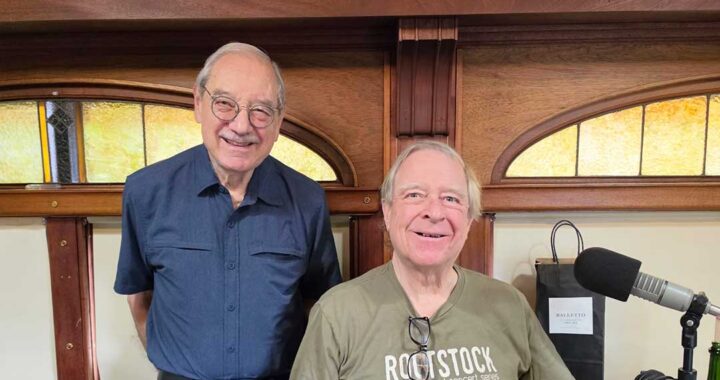
 Clark Smith, winemaker, author and frequent California Wine Country guest, is back with Dan Berger and Daedalus Howell. His last time on the show was this episode on April 3 of this year. Professor Damien Wilson from Sonoma State University is also with us, from the previous on-air segment. He runs the Wine Business Institute at SSU.
Clark Smith has a new book coming out, called The Myth of Science: A Winemaker Recommends Repairs. He has a Substack called Confessions of a Renegade Winemaker where he posts occasional excerpts from the book.
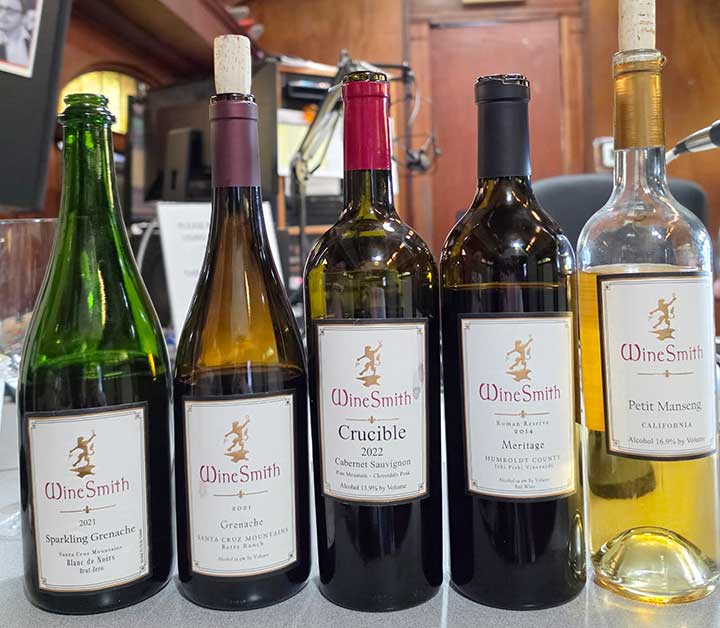
Clark loves the Santa Cruz mountains which he considers the best winegrowing region in California. Down the hill from Ridge there is a vineyard called Bates Ranch that grows some Grenache. Sometimes, the wine doesn’t “color up” so they made some sparkling wine from it. Clark has brought a bottle of that. Later he will open the red from the same vintage.
Clark says his favorite Dan Berger quote is, “I would agree with everything you said except then I would have no story.”
Clark thinks that Champagne grapes make crummy wine, thin and sour. 300 years ago, they made it sweet, like soda pop. The term “brut” means brute or beast, and was originally a term of disapproval, meaning only an animal would drink wine so dry. But today it’s all they make.
“I am notorious” – Clark Smith
Clark Smith, winemaker, author and notoriously opinionated enologist, declares that the general American tendency to focus on varietals over the land has been a mistake. He explains that part of the problem is that judges have to taste 40 or more wines. It used to be a judge would throw out the junk, then good better and best got bronze, silver and gold. The problem lies in the fact that the place of origin, or terroir, is such an important factor in the quality of the wine, but that information is often not on the label. This keeps valuable information from the judges and curious ordinary wine drinkers.
Dan got Clark involved in Appellation America about 20 years ago. They tasted a varietal from several different regions. Dan had a friend, the late Tom Rinaldi, a winemaker for Duckhorn, who could tell a Merlot from Carneros apart from any other.
Clark explains that in Europe, they don’t taste for varieties. He compares two wines that have different goals that you would never put together, such as a St. Emillion and a Cabernet Franc from the Loire Valley. Dan explains that they have different strategies, different planting, growing and watering regimes and different climate.