

Podcast: Play in new window | Download (Duration: 40:57 — 18.7MB) | Embed
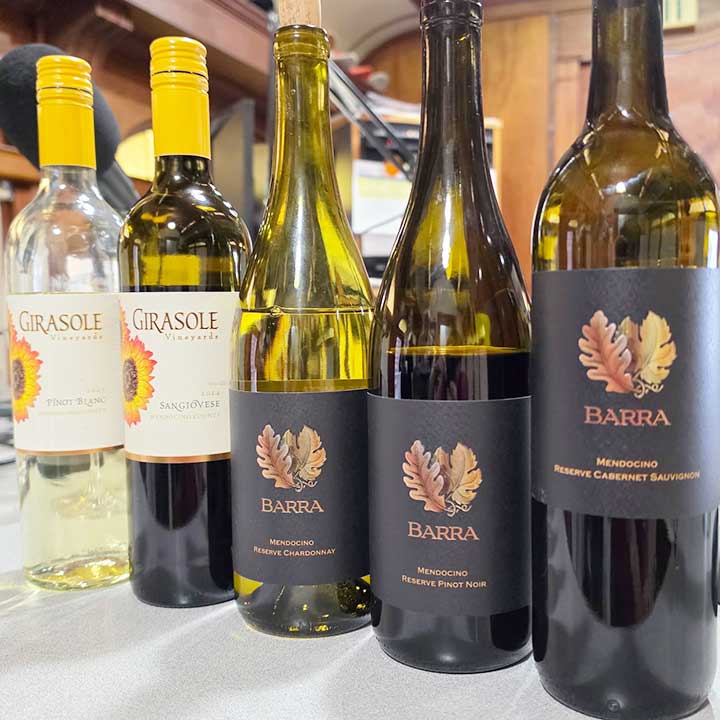 Martha Barra of Girasole Vineyards and Barra of Mendocino is back on California Wine Country with Dan Berger and Daedalus Howell.
This is Martha’s third time on the show, the first time was this episode in November of 2020 and the second time was this show on January 5, 2024.
The first wine in their glasses is a Pinot Blanc, not to be mistaken for a Sauvignon Blanc, some of the best that Dan has ever tasted. It has flavors of tropical fruit, a trace of orange peel and fresh fruit all the way. It is about $16 under the Girasole label.
Barra vineyards started in the mid-1950s and expanded by acquiring some adjacent properties. They are certified organic and were one of the early adopters of organic practices.
The Red Blotch Problem
There is a problem with red blotch virus on the vines and growers have to protect their vines. The vector is the alfalfa bug which moves on the wind. It can kill the vines in 10 years and also decreases the quality of the fruit. Red blotch started as a result of a virus that was discovered in 2008 at UC Davis and in 2009 on the east coast. They did not understand the vector at first. The wind can carry the alfalfa bug. There is a law that requires unused vineyards to be removed because they can harbor diseases of the vines.
The next tasting is a 2024 Chardonnay, aged on the lees for nine months, with 30% new French oak. It is not overly buttery, but lean and elegant. Martha describes the goal in their profile is “…good mouth feel, round in the mouth, true to the varietal and balanced.” This year was the earliest harvest ever for them, because of weather, with a heat peak in March.
Then they taste a Barra Reserve Estate Pinot Noir. The block is in its prime at about eight years old. It sells for about $28 which may be the best deal anywhere. Dan suggests pairing it with some salmon, cooked simply. “This is the way Pinot should be,” says Dan.
Going Organic in 1988
Martha explains their early embrace of organic practices, in 1988. They are concerned with with what goes into the watershed and the soil, and with the health of their workers too.
“We continuously build soils to enrich the soils and make them healthy. Healthy soils make healthy wines.” They also make biochar. To do this, they burn old vines at high heat and low oxygen, then cool it with water. This produces little chunks of carbon that are good for water retention and hosting micro-organisims. They mix this with the pomace from the vineyard and use it to regenerate the soil.